






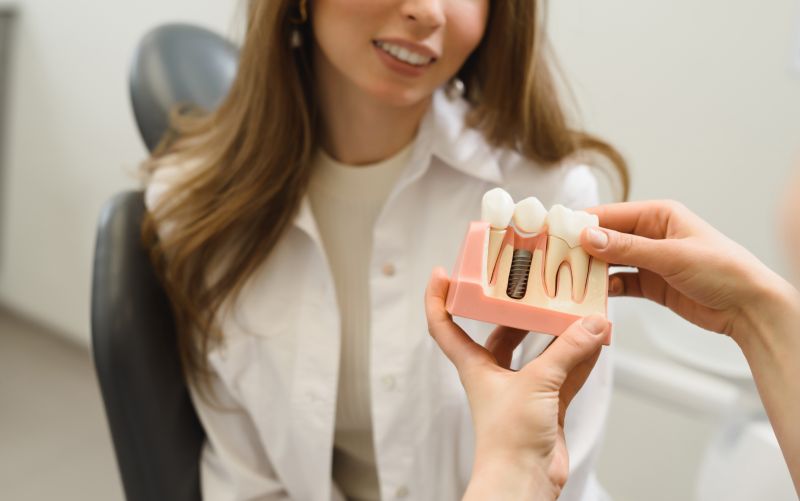
Preparing for dental implantation: what should you know?
Dental implantation is surrounded by myths linked not only to pain but also to the complicated integration of the implants or even possible rejection of the dental implants, so many people keep putting off this procedure. But fears are best dispelled by facts, which we'll share in this article.
First of all, dental implantation isn't a complicated and painful procedure, as is sometimes thought. It could be likened to a tooth-extraction operation. Local anaesthesia is given before the procedure, so during the operation the patient feels only the prick of the needle and, later, a slight vibration in the bone.
A patient having a simple, single-tooth implantation feels nothing unusual afterwards, and often doesn't even need painkillers. If a bone-restoration procedure – augmentation – is done, or more than one implant is screwed in at once, pain and swelling can appear. Then the patient has to take painkillers, and sometimes antibiotics are prescribed. The wound that appears after the operation also needs to be rinsed with antiseptic solutions.
A second common fear linked to the implantation procedure is the worry that the implant won't integrate. Here the most important factors are the surgeon's professionalism and the quality of the implants. At AND klinika, dental implantation is carried out by experienced implantology specialists using quality dental implants from the world-recognised Swiss manufacturer “Straumann group”, notable for their extremely high integration rates.
To avoid infections and complications, before dental implantation it's recommended to have professional dental hygiene done to remove dental plaque, tartar and bacteria. Because of the risk of inflammation, it's also recommended to treat problem areas of the oral cavity before implantation.
Implant integration and longevity, of course, also depend on the patient's own efforts – after implantation, careful oral care is essential. Brush your teeth at least a couple of times a day (morning and evening), use interdental floss and mouthwash. Don't forget to use a tongue cleaner, and every 4–6 weeks replace both it and your toothbrush with a new one. It's also recommended to have professional dental hygiene done twice a year.
Have more questions about the implantation procedure? Drop by AND klinika and we'll answer them!