





A plastic surgeon says outright: liposuction now costs less than buying a new phone
Lately, society has been rapidly following trends of a healthy body, proper living and nutrition grounded in naturalness. People are turning back to their authentic nature by giving up harmful lifestyles or unsuitable habits. These ideas do not bypass the field of aesthetic medicine either: increasingly, a direction based on moderate corrections is being popularised, one that essentially doesn't change the body's shapes or implant substances foreign to the body. Advanced technology and surgical possibilities have opened the way to such corrections, offering to remove excess fat in unwanted places by liposuction (fat suction) and to use this fat in other parts of the body. It's important to note in advance that fat suction is not for people craving drastic changes – it isn't a way to treat obesity. It's a correction recommended for changing the body's contour, correcting it, sometimes giving shape or lines, and filling in emptier areas and unevenness that appear with age or changes in body type. After all, intense sport or changing eating habits doesn't always ensure a change in all the desired body shapes. Disproportions often appear that, even after five years spent in the gym, don't end in the longed-for reduction of the waist or thighs by a few centimetres. We completely forget that perhaps we're genetically programmed to accumulate fat precisely in those places first, and that to get rid of the fatty layer we'd have to commit to long labour in the gym and a drastic change of eating habits, which would reduce not only the problem areas but all the other body shapes too.
Very often I hear the question: does suctioned fat grow back? To answer it, one should first emphasise that fat cells don't multiply. In an adult's body they have already formed and only grow larger or smaller over time. During a fat-suction operation these cells are suctioned out of the problem areas and a thinner layer remains there. So if you gain weight after a fat-suction operation, you'll simply see a slight increase in the body's silhouette. But if the excess weight gained is significant, then in the places where the body's accumulation of fat cells was fastest, the remaining fat cells will also grow fastest after suction, again creating disproportion. That's why fat suction is recommended for people with a stable weight, ensuring the best possible result from such an operation.
How much fat can be suctioned? Every clinic has its own algorithm and traditions, but usually it's recommended not to exceed 5–7% of body mass. That means that if you weigh 60 kg, up to 3–4 litres can be suctioned, but each case is individual and this figure can vary – of which, after preparation, about 1.5–2 litres of fat will remain for transfer. That would be enough in one transfer session to, for example, add one size to the bust and refine the buttocks.
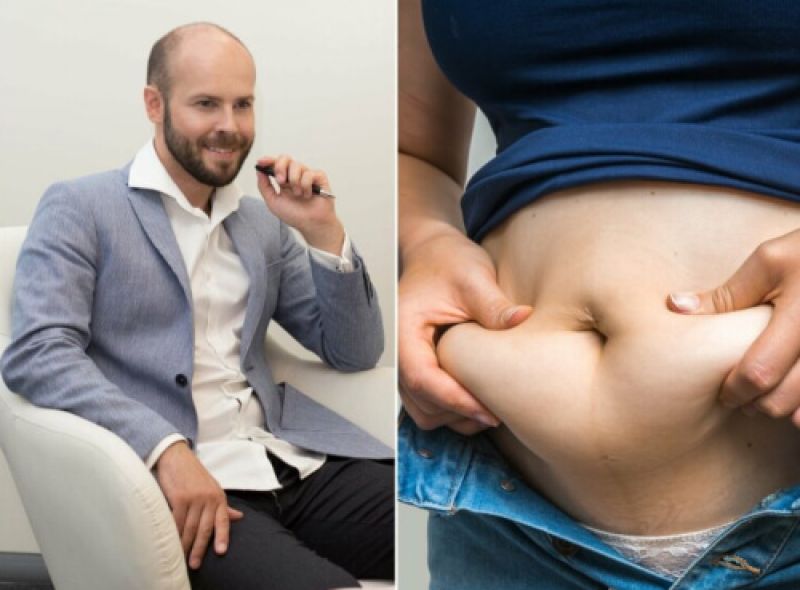
Which parts of the body can fat be suctioned from? Most often patients seek fat suction from the abdomen, waist, flanks, inner and outer thigh surfaces, inner knee surfaces and the back (shoulder blades, lower back, sacrum) zones. There are also unusual areas, for example the pubic region, upper arms and men's chest. To assess whether there is enough fat in a problem area to suction surgically, a simple “pinch test” can be done: take a fold of skin between two fingers, measure the straight distance between the fingers and divide it by two. If you get less than 1 cm, suction isn't recommended. Of course, in every case a personal consultation with a plastic surgeon is needed.
Are skin unevennesses possible after fat suction? Every operation has its own risks. Unevenness isn't a frequent companion of this operation. Usually unevenness appears only from not following the post-operative regimen prescribed by the doctor, from poor skin elasticity, from suctioning areas (the front of the thighs, the front of the knees, the shins) for which this type of fat removal isn't recommended, and from suctioning areas whose subcutaneous fat layer is thinner than 1 cm. Over the past decade, fat transfer, often called “yellow gold”, has been an inseparable part of lectures at plastic and reconstructive surgery congresses.
Can the suctioned fat be used somewhere? Yes, the suctioned fat cells can be injected into another part of the body, and some of them survive and take. This makes it possible to enlarge or emphasise shapes and opens the way for women who crave more shapely forms but avoid breast or buttock implants. The most popular uses of fat are the Brazilian buttock lift, breast augmentation or symmetrisation, and facial rejuvenation. Besides the most common areas for fat use, there are others too – rejuvenation of the hands and the labia majora. Incidentally, it was discovered that among the fat there are small pluripotent cells capable of changing into the cells the body needs at that moment. They further stimulate skin rejuvenation and firmness, so injecting a concentrate of such cells beneath ageing skin stimulates its renewal.
What percentage of fat takes? Fat takes depending on the blood supply at the recipient (the place it's injected into) site: in zones with better blood supply the take is much higher, so one operation is usually enough. For example, in the abdomen, thighs and buttocks up to 40% of fat takes, while in the facial area the take can reach as much as 70%. To give concrete examples, to enlarge a B-cup bust to a C, you'd need on average about 300 ml of fat in each breast, of which around 120 ml would likely take. So to enlarge the bust by two sizes, you'd need at least two such sessions. That said, enlarging the bust by one size in a single session is more likely when a woman has a larger bust than an A-cup, because the amount of fatty tissue present ensures better take of the new fat cells. This also explains why, to enlarge the bust to a specific size, implants are recommended more often than fat transfer. Nevertheless, fat transfer can successfully refine or be combined with other operations to achieve a more perfect, more natural result. Of course, each case is individual, and the percentage of fat that takes depends on the body and lifestyle. Fat take is greatly limited by smoking and by not following the doctor's prescribed regimen. I'd like to finish with a thought from Anton Chekhov: “Everything about a person should be beautiful – the face, the clothes, the soul and the thoughts.” For a long time aesthetic surgery was considered a sign of luxury, but is that true these days, when surgical treatment can be cheaper than the latest flagship, designed to last only the next two years?