






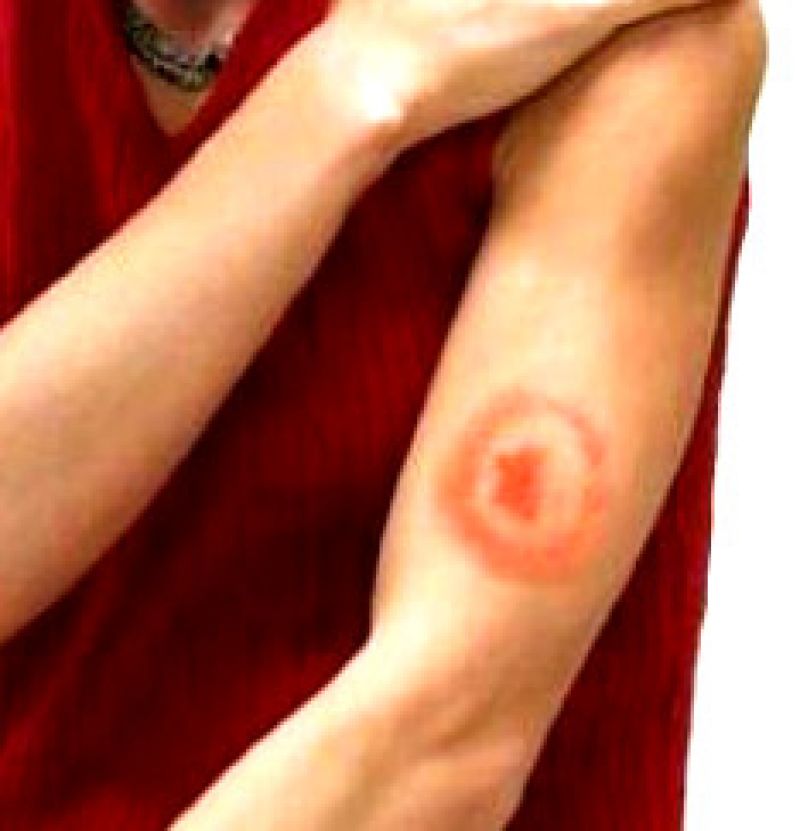
Are the bloodsuckers attacking? Let's defend ourselves!
VACCINES PROTECT AGAINST TICK-BORNE ENCEPHALITIS
In Lithuania, vaccines against tick-borne encephalitis are not yet included in the state's schedule of reimbursed vaccinations, but projects are already being drawn up to have certain groups of the public vaccinated against this severe disease, which causes inflammation of the brain. For now, you have to pay for the vaccines yourself.
From what age can you be vaccinated? Children can be vaccinated against tick-borne encephalitis from one year of age. Younger children are not vaccinated. Vaccination is completely safe for breastfeeding mothers. But recently, at a scientific conference, a case was examined in which a child vaccinated against tick-borne encephalitis contracted the disease. Immunity had not developed in the child, and they had a very severe form of it.
Why might this have happened? One hypothesis was that the child was still being breastfed, and the mother's antibodies may have suppressed the immune response. This is only a hypothesis, not yet scientifically proven. I would recommend vaccinating children who are no longer breastfed. From the age of one, a child can eat a full diet without receiving mother's milk. Alternatively, the mother should not be vaccinated against tick-borne encephalitis. Antibodies appear in the milk only if the mother herself has antibodies – has had the disease or been vaccinated against tick-borne encephalitis. If a breastfeeding mother wants to be vaccinated together with her child, she must not have immunity to this disease. In that case the mother and child should be vaccinated together.
In Lithuania, vaccines from various manufacturers are offered. How do they differ, and which is better? TICO-VAC is an Austrian vaccine. The Austrians were the first to start producing vaccines against tick-borne encephalitis. ENCEPUR is a German vaccine. Both vaccines are effective and safe. Children and people over 65 are advised to be vaccinated with the TICO-VAC vaccine because of certain antigens in the vaccine's composition. But this is only advice; there are no strict recommendations.
Because of their specific scent, bloodsuckers are also very fond of children, and children's skin is thinner too.
Then you should wait a month and have blood tests done, which will show how to proceed – whether to start the vaccination schedule anew or continue the vaccination as usual. There have been cases where a person had their third vaccination only after five years, but the blood tests showed that immunity had formed. Every body reacts individually.
Are all children advised to be vaccinated against tick-borne encephalitis? Children who catch tick-borne encephalitis have a milder illness than elderly people. But inflammation of the brain is also dangerous for a growing brain, because there is always a risk of epilepsy, and the child may have learning difficulties in the future. I would recommend vaccinating from early childhood, because in childhood very good immune memory forms and antibodies persist for a long time. In older people immunity no longer forms so well, and the vaccine may be less effective. I agree with all parents who think it worth vaccinating their children. There's no need to worry that a small child already receives a lot of vaccinations. However, you always have to weigh up the risk. If a one-year-old is growing up in the city, walks only on pavements or tended park lawns and spends little time in nature, it may not be appropriate to vaccinate them at two or three. You have to assess the risk of infection. If a little one is growing up in the countryside or is often out in the ‘wild’, then in that case I would recommend vaccinating even a one-year-old. Spring is the most suitable time to start the first vaccinations against tick-borne encephalitis.
Vaccinations against tick-borne encephalitis follow a particular schedule. And what if the vaccination schedule gets mixed up? A vaccination is missed? There are cases where a person receives the first and second vaccinations but forgets the third, has it later than a year afterwards, or doesn't have it at all.
Usually, three doses are needed for immune memory to form. Sometimes that memory forms after just two doses. If the third vaccination is forgotten, I would advise having a single dose, however much time has passed. Vaccination against tick-borne encephalitis follows a particular schedule: in the first year two vaccinations are given, and a year later, the third. After that immunity is maintained by vaccinating every 3–5 years. The interval depends on the vaccine and on the number of doses received. If a person is already receiving, say, their seventh booster, the intervals between vaccinations can be as much as 5 years. The first vaccinations should be given every 3 years. If you were vaccinated with one vaccine three or five years ago, it isn't essential that a few years later you continue with the same manufacturer's vaccine. Any tick-borne encephalitis vaccine triggers the same immune response. The very first doses should be given with the same manufacturer's vaccine; later this isn't so important.